Roda meets...Liton Ullah
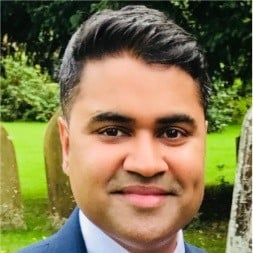
Liton Ullah
Liton is an expert in public service design and delivery. He started his career in business development, securing multi-million-pound deals in the employability, skills and advice sectors, before moving into operational roles, leading major market entries into India and South Africa. He currently runs his own consultancy, Think Social, and is an Associate Partner at The Social Assistance Partnership; working with charities and SMEs to design, bid for and deliver transformative public services.
1. How do you approach designing strategy for your organisation?
The first thing is not just to make it an internal activity. You have to externalize your strategy design, bringing in voices and insights from as many actors and audiences as possible - funders, friends, clients, suppliers, partners. Of course, you should involve key internal groups in your core strategy design team, but often it is too focused on this group - you need balance.
Strategy development should be an authentic process, not just a cookie-cutter exercise from other clients or examples you have found. It just does not work!
2. What were the biggest challenges you faced when implementing your strategy?
The biggest challenge is usually finding the best way to work effectively with the culture of my client. Culture can vary hugely between different organisations and can be an enabler or a barrier to a new strategy. I try to tailor my approach to the culture, capacity and capability of the organisation. For example, a McKinsey/KPMG/Bain ‘big consultancy’ style approach simply will not land well in a small charity where a more organic, jargon-free, and simple approach would work better.
It is also crucial to manage expectations. What output does the organisation want from the process? A 60-page document? A five-slide deck? A visual approach? Text heavy? A focus on principles or the details? Knowing this is essential to getting the right outcome for the organisation.
3. How do you ensure your plans and priorities are understood by teams across the organisation?
Firstly, coproduction is key. You must make sure that people in the organization are not bystanders to the strategy process. It cannot just be done by the hierarchy leadership and external consultants. Bringing service users, the board, trustees, front-line teams alongside senior leadership makes strategy design a richer process and helps everyone understand what needs to happen to make it a reality.
You also have to establish a process or framework to deliver the strategy. People need to understand what will be happening and when, and how they can support it.
Lastly, it is important that external consultants do not own the strategy...we are there to ‘do with’ not ‘do to’!
4. What resources do you use to help you perform better at work? (tools, books, courses, podcasts, events)
I use all of these! I take every opportunity to listen to and learn from the experts, face to face if possible. There really is no excuse now that Covid is over.
As for tools, I enjoy Miro and any platform that allows people to collaborate and share ideas in real time.
5. What is the best piece of advice you have ever been given, personal or professional?
When I was working in India I saw a lot of ego-driven hierarchical leadership that demoralized teams and really affected performance. Whilst there a mentor said to me “don’t ever wear the cape.”
As a consultant, it is always important to remember that client success matters most – that is why you are there. It is not about you winning, but about unconditional regard and consideration for the customer and what they need from you.
6. In the last five years, what new belief, behaviour or habit has most improved your life?
The idea of servant leadership. Public services are all about servant leadership, where we choose to work in hard, challenging environments and tackle difficult issues. Understanding this has changed how I approach things and the work I do.
I have also learned to suppress my natural enthusiasm to be involved in lots of things! I try to be more selective and give 100% to the most important projects, and step back from other opportunities.
7. What are the worst behaviours you hear in your profession or area of expertise?
I repeatedly see the issue of dominant logic appearing – the “this is how it's always been” mentality that gets in the way of innovation and change. Starting from a position of “it’s never been done like this before; can we trust it?” stops excellent public service design opportunities.
8. What has been the most worthwhile investment in yourself that you have ever made?
Number one is going self-employed! It has given me the ability to manage my time the way I want to. It has led me to meet new people, grow personally, work on a diverse range of projects, and keep control over who I work with and what work I focus on.
I also worked with amazing people at A4e, who believed in giving people great opportunities. This gave me a sense of courage, as I knew that if I can work hard on what I believe in I can do it myself and pursue opportunities that really excited me.
You always have the fear of not learning and earning enough, not staying relevant...this drives different behaviors as you learn to take full responsibility for your personal development and growth.
9. When you feel overwhelmed or unfocused, what do you do?
I always look forward to the next Monday and picture that in my head. It’s my happiest day of the week, as not only do I take the afternoon off to be with my son and wife, but I also play with a local Dad’s football group in the evening.
10. If you could, knowing what you do today, what advice would you give to yourself at 18 years old?
Don’t worry about growing up, or what you are going to be when you are older, try to just enjoy the learning journey for its own sake. Instead of trying to BE something, stand FOR something. That may be the thing you pursue for the rest of your life.
It is OK if at 22 you do not know what you want to do at 42. That is fine, it just means you have not discovered the right goal for you yet, but you will!
__________
To receive future interviews direct in your inbox please sign up. You can also follow us on LinkedIn to receive updates on Roda meets content over the coming weeks.